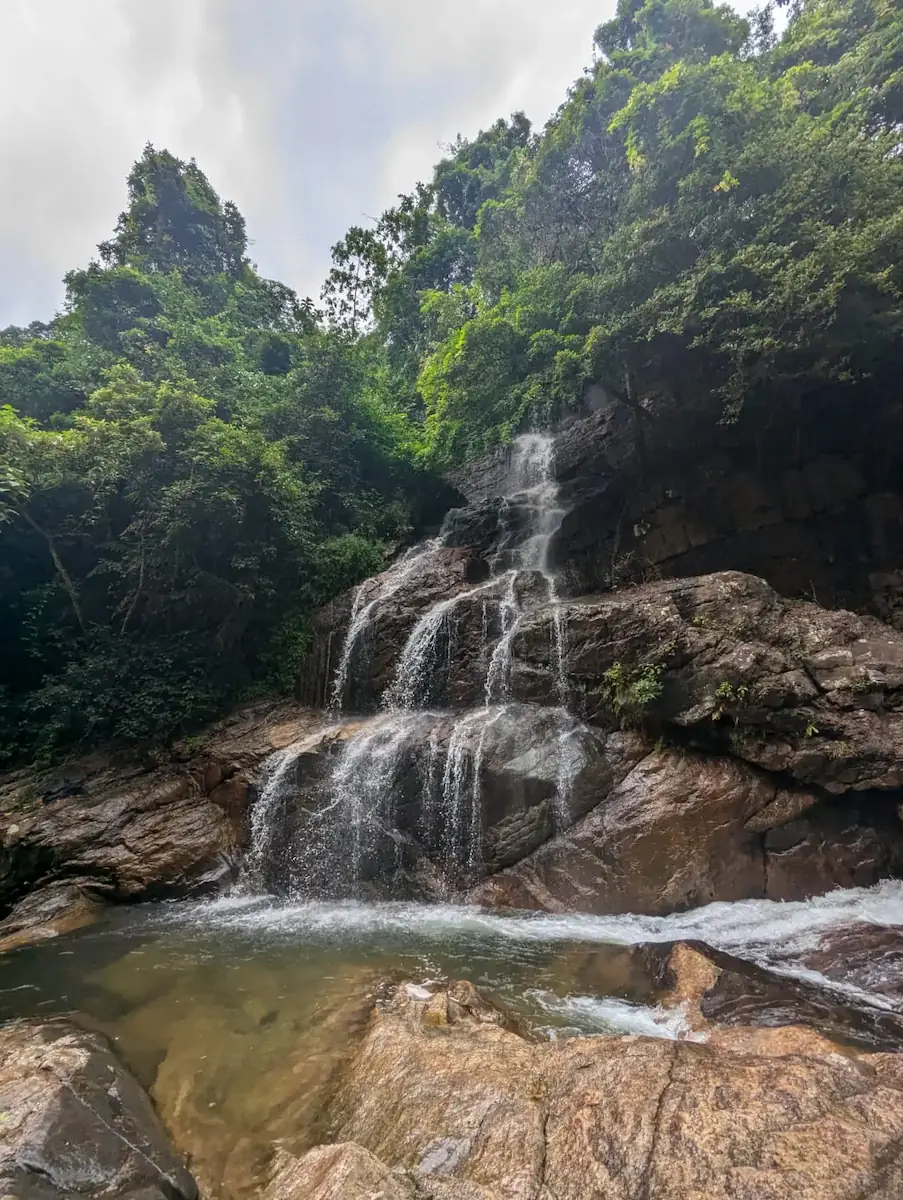
Ask any of my guests what surprised them most about the Knuckles, and a lot of them say the same thing: the water.
The range is laced with streams, cascades, and hidden rock pools - many of them nameless, most of them without another soul in sight. After a long climb through the cloud forest, sliding into a cold, clear pool beneath a waterfall is one of the great rewards of trekking here. Let me tell you why these falls exist, and how to enjoy them safely.
Why the Knuckles Has So Much Water
The Knuckles is a cloud forest. Its high ridges snag moisture straight out of the passing clouds, and the dense canopy holds it. That water feeds a network of streams that tumble down the slopes as waterfalls, gathering into the Hulu Ganga before it flows on to join the Mahaweli - Sri Lanka's longest river - further downstream.
This is why the landscape stays green and dramatic even when the lowlands are dry. The forest is, quite literally, a water factory.
The Kinds of Falls You'll Find
Rather than name specific spots - many of the best are unmarked and change character with the seasons - here is what to expect out on the trail:
- Tall cascade falls: Ribbon-like drops that spill down mossy rock faces, often framed by ferns and forest. Perfect for photography.
- Hidden rock pools: Deeper, calmer basins carved into the bedrock, ideal for a swim. These are the ones guests remember.
- Stepped stream cascades: Series of small drops and natural chutes where cold water runs over smooth stone. Great for cooling your feet on a hot climb.
Part of the joy is that reaching many of them requires a short scramble off the main path - which is exactly why they stay quiet and pristine.
When Do the Waterfalls Run Best?
- During the inter-monsoon months (April to June and October to December): The falls are at their most powerful and dramatic. Expect strong flow, lush surroundings, and - yes - more leeches in the undergrowth.
- In the drier windows (January to March and July to September): Flow is gentler, the water is clear, and the pools are at their best for calm, safe swimming.
There is no bad time, only different moods. For the full seasonal picture, see our guide to the best time to visit the Knuckles.
Safety First: How to Swim Smart
Mountain water is beautiful, but it demands respect. A few rules I insist on with my guests:
- Never jump or dive. Underwater rocks and shifting depths make this genuinely dangerous. Always enter feet-first and slowly.
- Check the current. After heavy rain, even a modest-looking stream can move with surprising force. If the water is fast or brown, admire it from the bank.
- Mind the cold. The water comes straight off the mountain and is colder than it looks. Ease in.
- Watch the rocks. Wet stone is slick. Move slowly and keep your footwear on or nearby.
- Go with someone who knows the spot. Water levels and safe entry points change through the year. A local guide knows which pools are safe to swim today.
Leave No Trace
These places are unspoiled because so few people reach them. Please help keep them that way: carry out everything you carry in, use no soap or shampoo in the pools, and leave the plants and rocks as you found them. The next trekker deserves the same wild, untouched moment you had.
Bring the Right Kit
If swimming is on your list, pack a swimsuit, a quick-dry towel, and sandals or water shoes for slippery rock. Keep your phone or camera in a dry bag until you are safely settled - the temptation to photograph these falls is real, but so is the risk of dropping it in.
Come find them with us
Our guided treks weave in the range's best swimming spots, chosen for conditions on the day. Explore the Knuckles Cloud Forest Trek, see all our Knuckles Mountain Range trekking routes, or contact us to build a waterfall-focused route.
Inspired to explore?
Book a private guided trek with Senarath and experience the magic of the Knuckles Mountain Range firsthand.
Inquire Now